
Medical Waste Disposal: What It Is, Types of Medical Waste, and How to Dispose of It Properly
2/2/2026
What Is Medical Waste?
Medical waste also known as regulated medical waste (RMW) includes any waste generated during medical, dental, veterinary, laboratory, or healthcare-related activities that may pose a biological, chemical, or physical hazard.
Improper disposal of medical waste can lead to:
-
Needlestick injuries
-
Exposure to bloodborne pathogens
-
Regulatory fines and violations
-
Environmental contamination
That’s why medical waste disposal must follow strict federal and state guidelines.
Types of Medical Waste
Understanding the different types of medical waste is essential for proper segregation and disposal.
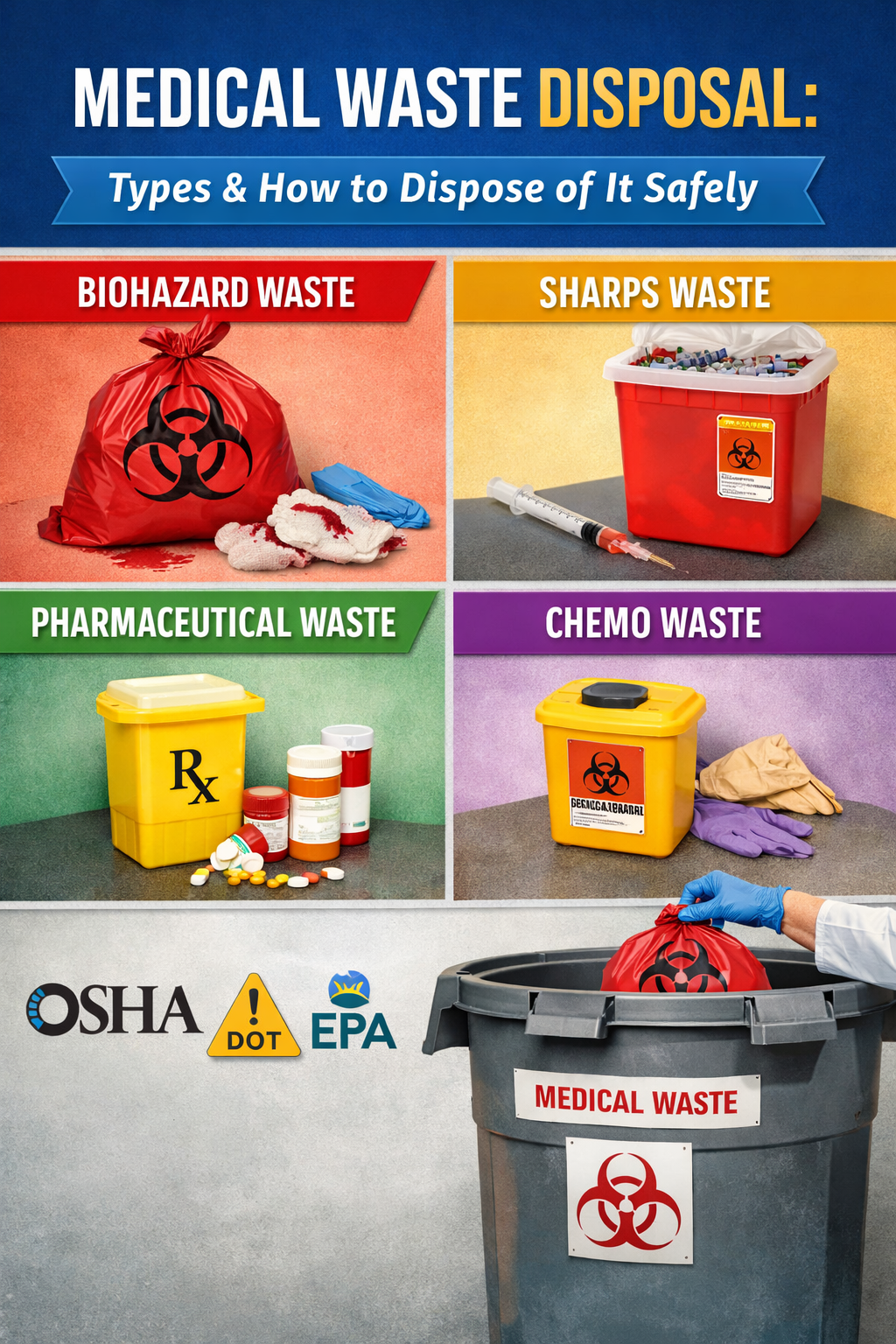
1. Biohazardous Waste (Red Bag Waste)
Biohazardous waste includes items contaminated with blood or bodily fluids, such as gauze, gloves, bandages, and PPE. This waste is typically placed in red bags and disposed of through approved treatment methods.
2. Sharps Waste
Sharps waste includes needles, syringes, lancets, scalpels, and other sharp objects capable of causing injury. Sharps must always be placed in puncture-resistant sharps containers and never disposed of in regular trash.
3. Pharmaceutical Waste
Pharmaceutical waste includes expired, unused, or partially used medications. This waste is further divided into:
-
Non-RCRA pharmaceutical waste
-
RCRA hazardous pharmaceutical waste
-
Controlled substances
Each category has specific disposal requirements to ensure compliance.
4. Trace Chemotherapy Waste
Trace chemotherapy waste includes materials that have come into contact with residual amounts of chemotherapy drugs, such as IV tubing, PPE, and empty drug containers. This waste must be disposed of separately from regular biohazard waste.
5. Pathological Waste
Pathological waste includes human or animal tissues, organs, and body parts. This type of medical waste typically requires incineration for proper disposal.
How to Dispose of Medical Waste Properly
Proper medical waste disposal starts with segregation at the point of generation. Each waste stream must be placed in the correct container to remain compliant.
Key Steps for Proper Medical Waste Disposal:
-
Use the correct containers (sharps, pharmaceutical, biohazard, chemo)
-
Never overfill containers
-
Secure lids and follow fill lines
-
Schedule regular pickups with a licensed medical waste disposal company
-
Maintain manifests and documentation for compliance
Working with a professional medical waste disposal provider ensures your waste is transported, treated, and disposed of safely and legally.
Why Proper Medical Waste Disposal Matters
Failing to dispose of medical waste correctly can result in:
-
OSHA citations
-
EPA and state regulatory fines
-
Increased liability
-
Safety risks to employees and the public
Proper medical waste management protects your facility, staff, and reputation while ensuring environmental responsibility.
Medical Waste Disposal Services Near You
If you’re searching for medical waste disposal near me, it’s important to choose a provider that offers:
-
Reliable scheduled pickups
-
All required waste streams (biohazard, sharps, pharmaceutical, chemo)
-
Compliance support and documentation
-
Competitive, transparent pricing
At ME-Bio, we provide comprehensive medical waste disposal solutions tailored to healthcare facilities of all sizes.
Final Thoughts
Medical waste disposal isn’t just a regulatory requirement it’s a critical part of operating a safe and compliant healthcare facility. By understanding the different types of medical waste and following proper disposal procedures, you can reduce risk, protect your staff, and stay compliant.
If you need professional medical waste disposal services, contact met-bio.com today to learn more about our compliant, cost-effective solutions.