
Trace Chemotherapy Waste Disposal: What Healthcare Facilities Need to Know
11/2/2026
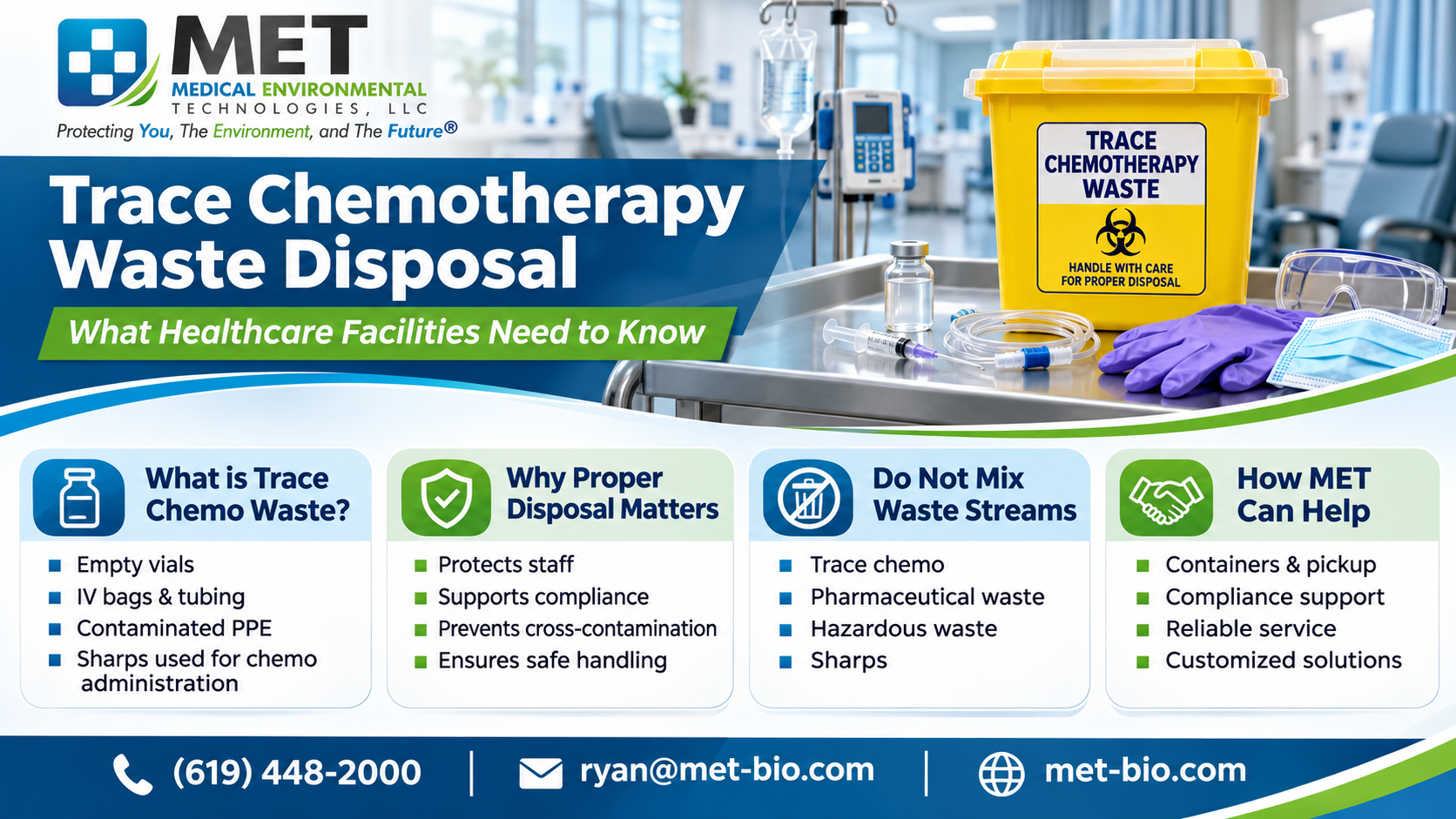
Trace Chemotherapy Waste Disposal: What Healthcare Facilities Need to Know
Healthcare facilities that administer chemotherapy medications are responsible for properly identifying, segregating, and disposing of chemotherapy-related waste. While some chemotherapy waste may look similar to standard medical waste, it often requires a completely different disposal process.
Understanding the difference between trace chemotherapy waste, bulk chemotherapy waste, and hazardous pharmaceutical waste can help protect employees, reduce compliance risks, and ensure waste is handled safely from the point of generation through final disposal.
What Is Trace Chemotherapy Waste?
Trace chemotherapy waste generally includes items that have come into contact with chemotherapy medications but are considered essentially empty.
Common examples may include:
Empty chemotherapy vials
Empty IV bags and tubing
Syringes and needles used to administer chemotherapy medications
Gloves, gowns, masks, and other contaminated PPE
Absorbent materials with small residual amounts of chemotherapy medication
Other disposable materials used during chemotherapy treatment
Trace chemotherapy waste is typically placed into a designated yellow chemotherapy waste container rather than a standard red biohazard container.
Trace Chemo vs. Bulk Chemo Waste
One of the most important distinctions is the amount of medication remaining in the container.
Trace chemotherapy waste generally consists of items that contain only residual amounts of chemotherapy medication.
Bulk chemotherapy waste may include partially used medications, expired chemotherapy drugs, spills, or containers that still contain a significant amount of medication.
Bulk chemotherapy waste may need to be managed as hazardous waste depending on the medication and its characteristics.
Because disposal requirements can vary by product, it is important to properly identify the medication before determining the appropriate waste stream.
Why Proper Segregation Matters
Placing chemotherapy waste into the wrong container can create unnecessary safety and compliance issues.
Keeping waste streams properly separated helps:
Protect healthcare employees and waste handlers
Prevent hazardous medications from entering the regular medical waste stream
Reduce the risk of rejected waste at treatment facilities
Maintain proper documentation and waste tracking
Help healthcare facilities remain compliant with applicable waste regulations
Facilities should clearly label containers and train employees on which materials belong in each waste stream.
Do Not Mix Pharmaceutical Waste With Trace Chemo
Pharmaceutical waste and chemotherapy waste should not automatically be placed into the same container.
Expired medications, partially used medications, controlled substances, hazardous pharmaceuticals, and chemotherapy medications can all have different disposal requirements.
When there is uncertainty, the safest approach is to identify the medication or chemical first so the appropriate waste stream can be determined.
How MET Can Help
Medical Environmental Technologies (MET) provides healthcare facilities with compliant waste disposal solutions designed around their specific waste streams.
Our team can help with:
Trace chemotherapy waste disposal
Biohazardous and regulated medical waste
Sharps disposal
Pharmaceutical waste
Hazardous pharmaceutical waste
Pathological waste
Hazardous waste and chemical disposal
Waste containers and supplies
Waste documentation and manifests
Whether your facility generates chemotherapy waste regularly or only occasionally, MET can help develop a disposal program that fits your needs.
Need a Quote?
Not sure which container or waste stream you need?
Contact MET and let us know the type of waste you generate and approximately how much you have. Our team can help identify the appropriate disposal solution and provide a detailed quote.
Medical Environmental Technologies (MET)
Phone: (619) 448-2000
Email: ryan@met-bio.com
Website: met-bio.com
Found a lower price? Send us the written quote, and we’ll do our best to match or beat it.