
Medical Waste Segregation in California: What Goes in Each Container?
10/29/2026
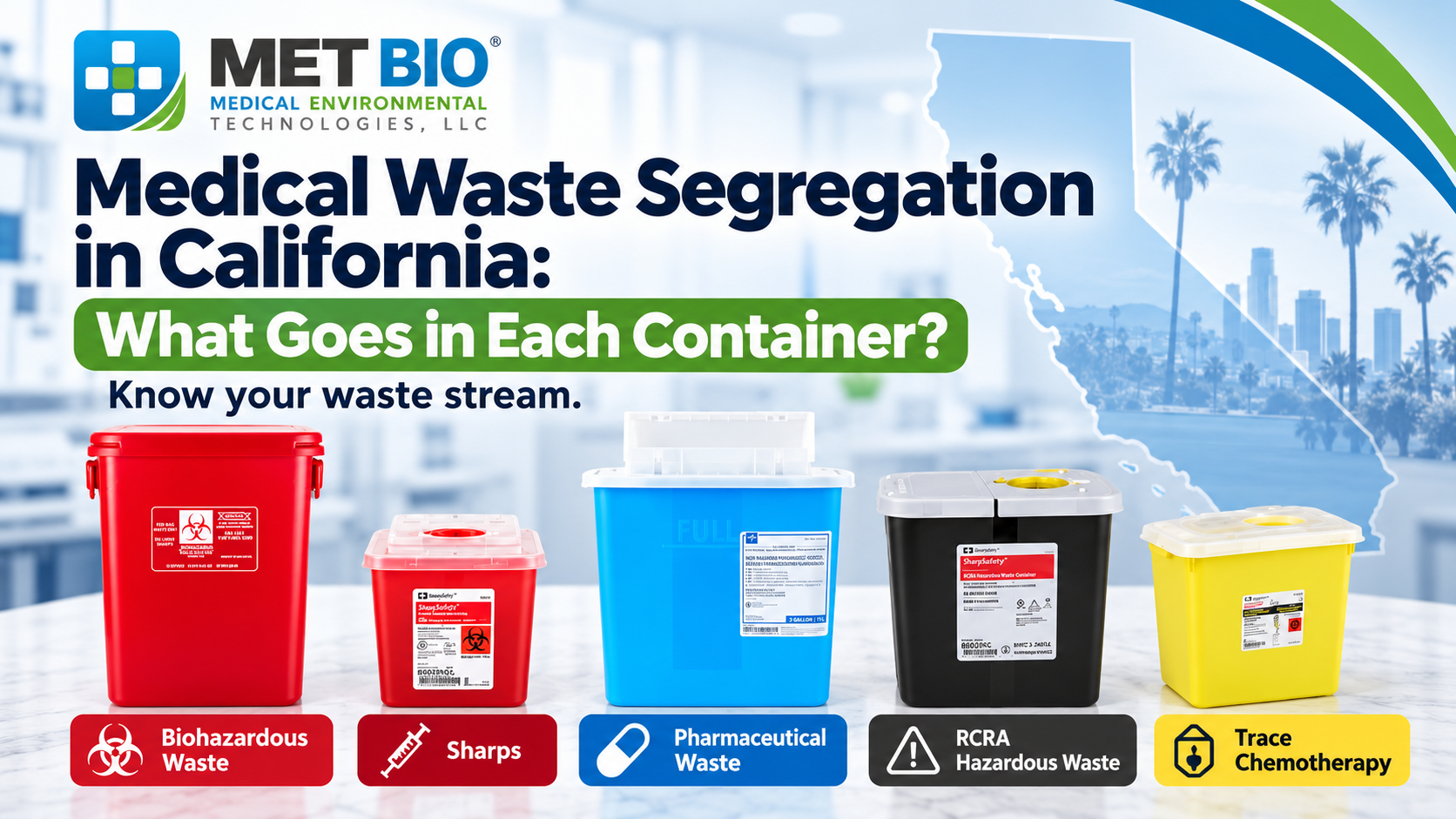
Medical Waste Segregation in California: What Goes in Each Container?
Proper medical waste segregation is one of the most important parts of maintaining a safe, compliant, and cost-effective healthcare facility.
Not every type of medical waste belongs in a red bag. Sharps, pharmaceutical waste, trace chemotherapy waste, hazardous pharmaceuticals, and other regulated materials may require different containers and disposal methods.
For healthcare facilities in California, understanding these differences can help reduce unnecessary disposal costs, improve workplace safety, and support compliance with state and federal regulations.
At Medical Environmental Technologies, we help healthcare facilities identify, separate, and properly dispose of multiple waste streams. Below is a practical guide to some of the most common medical waste categories.
1. Biohazardous Waste: Red Bags and Biohazard Containers
Biohazardous waste generally includes materials contaminated with blood or other potentially infectious materials.
Common examples may include:
Blood-soaked gauze and bandages
Disposable PPE contaminated with blood or bodily fluids
Suction canisters and tubing
Dialysis waste
Certain laboratory materials
Other non-sharp items contaminated with potentially infectious material
In California, biohazard bags used for medical waste are generally red and must meet applicable requirements under the California Medical Waste Management Act.
Once filled, red bags are typically placed inside a rigid secondary container approved for storage and transportation.
What should not go in a red bag?
Red bags should generally not be used for:
Needles or other sharps
Pharmaceutical waste
Hazardous chemicals
Bulk chemotherapy waste
Regular trash
Correct segregation at the point of generation can help prevent unnecessary disposal costs and reduce risk to employees handling the waste.
2. Sharps Waste: Puncture-Resistant Sharps Containers
Sharps require their own designated containers.
California requires sharps waste to be placed into an approved sharps container. These containers are designed to be rigid, puncture resistant, leak resistant when sealed, and difficult to reopen.
Examples of sharps include:
Needles
Syringes with attached needles
Lancets
Scalpel blades
Broken contaminated glass
Certain ampoules
Dental wires
Slides and coverslips when considered sharps
Sharps should never be placed loose into a red bag.
Once a sharps container is full and ready for disposal, it should be properly closed and managed according to applicable storage and disposal requirements.
3. Non-Hazardous Pharmaceutical Waste
Pharmaceutical waste that does not meet the definition of hazardous waste should be separated from regular biohazardous waste.
Depending on the facility and waste stream, non-hazardous pharmaceutical waste may include:
Expired medications
Partially used medications
Unused injectable medications
Certain vaccines
Medication vials containing remaining product
Non-hazardous prescription and over-the-counter medications
At MET, non-hazardous pharmaceutical waste is commonly collected in designated pharmaceutical waste containers rather than red biohazard bags.
Separating pharmaceuticals properly is especially important because medications may require different treatment methods than ordinary regulated medical waste.
4. Hazardous Pharmaceutical Waste and RCRA Waste
Some pharmaceuticals and chemicals meet federal or California hazardous waste requirements.
Examples may include materials that are:
Ignitable
Corrosive
Reactive
Toxic
Specifically listed as hazardous waste
Certain pharmaceuticals may also qualify as RCRA hazardous waste.
California hazardous waste rules can be more stringent than federal requirements, so facilities should not assume that a medication or chemical is non-hazardous simply because it does not appear hazardous at first glance.
Hazardous pharmaceutical waste should be evaluated separately and managed in accordance with applicable hazardous waste regulations.
At MET, hazardous waste is reviewed and classified before pickup so the proper packaging, labeling, transportation, and disposal method can be determined.
5. Trace Chemotherapy Waste
Trace chemotherapy waste should be separated from standard red-bag medical waste.
Common examples may include:
Empty chemotherapy vials
Empty IV bags
Tubing
Gloves
Gowns
Other PPE contaminated with trace chemotherapy residue
Trace chemotherapy waste is commonly collected in yellow containers or yellow bags to help distinguish it from ordinary biohazardous waste.
It is important to understand the difference between trace chemotherapy waste and bulk chemotherapy waste.
If medication remains in the vial, bag, tubing, or container beyond allowable trace amounts, the material may require management as hazardous waste rather than trace chemotherapy waste.
Why Proper Medical Waste Segregation Matters
Improper segregation can create several problems for healthcare facilities.
Higher disposal costs
If regular biohazardous waste is mixed with a more expensive waste stream, the entire container may need to be managed using the more expensive disposal method.
Correct segregation can help prevent unnecessary costs.
Employee safety
Placing sharps into red bags or mixing incompatible waste streams can increase the risk of needle sticks, spills, and employee exposure.
Regulatory compliance
California healthcare facilities may be subject to requirements from agencies including the California Department of Public Health, California Department of Toxic Substances Control, local enforcement agencies, OSHA, DOT, and other regulatory authorities depending on the waste stream.
Proper segregation helps facilities maintain a more organized and compliant waste management program.
Environmental protection
Pharmaceuticals and hazardous chemicals should not be disposed of through sinks, toilets, regular trash, or other inappropriate disposal methods.
Proper collection helps ensure that these materials reach an appropriate treatment or disposal facility.
Common Medical Waste Segregation Mistakes
Some of the most common problems we see include:
Putting medications into red biohazard bags
Throwing sharps into red bags
Mixing hazardous pharmaceuticals with non-hazardous pharmaceuticals
Treating chemotherapy waste as ordinary medical waste
Putting chemical waste into pharmaceutical containers
Using the wrong container for transportation
Allowing containers to become overfilled
Failing to properly label waste containers
Many of these issues can be prevented with proper employee training and clear container placement.
How Can Healthcare Facilities Make Segregation Easier?
A few simple practices can make a significant difference.
Place the correct container near the area where the waste is generated. Clearly label each container and train employees on what belongs in each waste stream.
Facilities should also periodically review their waste program because medications, procedures, and waste volumes can change over time.
If employees are unsure how to dispose of a specific item, it is always better to ask before placing it into a waste container.
Medical Waste Disposal Services in California
Medical Environmental Technologies provides medical waste disposal services for healthcare facilities throughout California and beyond.
Our services include:
Biohazardous waste disposal
Sharps disposal
Pharmaceutical waste disposal
Hazardous pharmaceutical waste
Trace chemotherapy waste
Pathological waste
Hazardous waste
Shredding services
Compliance training and support
We offer flexible service frequencies based on your facility’s actual needs.
Rather than forcing every customer into the same pickup schedule, we can help determine a frequency that fits your waste volume and operations.
Need Help Identifying a Waste Stream?
If you are unsure whether an item belongs in a red bag, sharps container, pharmaceutical container, chemotherapy container, or hazardous waste container, our team can help.
Proper classification before disposal can save time, reduce costs, and help prevent compliance problems.
Contact Medical Environmental Technologies to review your current medical waste program or request a quote.
Medical Environmental Technologies
(619) 448-2000
met-bio.com
Frequently Asked Questions
What goes into a red biohazard bag in California?
Red biohazard bags are generally used for non-sharp medical waste contaminated with blood or other potentially infectious materials. Sharps, pharmaceutical waste, hazardous chemicals, and certain chemotherapy waste should be segregated separately.
Can needles go into a red biohazard bag?
No. Sharps such as needles and syringes must be placed into an approved sharps container.
Can medications go into a red bag?
Generally, pharmaceutical waste should be separated from ordinary biohazardous waste and placed into the appropriate pharmaceutical waste container.
What color container is used for trace chemotherapy waste?
Trace chemotherapy waste is commonly collected in yellow containers or yellow bags to distinguish it from regular biohazardous waste.
What is the difference between pharmaceutical waste and hazardous pharmaceutical waste?
Non-hazardous pharmaceutical waste does not meet hazardous waste criteria and can generally be managed through a pharmaceutical waste program. Hazardous pharmaceutical waste meets federal or California hazardous waste requirements and must be managed under applicable hazardous waste regulations.
Who regulates medical waste in California?
The California Department of Public Health oversees implementation of the California Medical Waste Management Act, while hazardous waste may fall under the California Department of Toxic Substances Control. Local enforcement agencies may also regulate medical waste generators depending on the jurisdiction.