Hazardous Waste Disposal in California: A 2025 Compliance & Safety Guide
7/7/2025
California is home to some of the most rigorous hazardous waste disposal regulations in the U.S. Whether you're a healthcare provider, laboratory, or industrial facility, staying compliant is critical—not only for safety and environmental protection, but also to avoid steep fines.
In this article, we’ll cover how hazardous waste disposal works in California, recent regulatory updates, key challenges facing the industry, and how your business can stay ahead.
What Is Hazardous Waste in California?
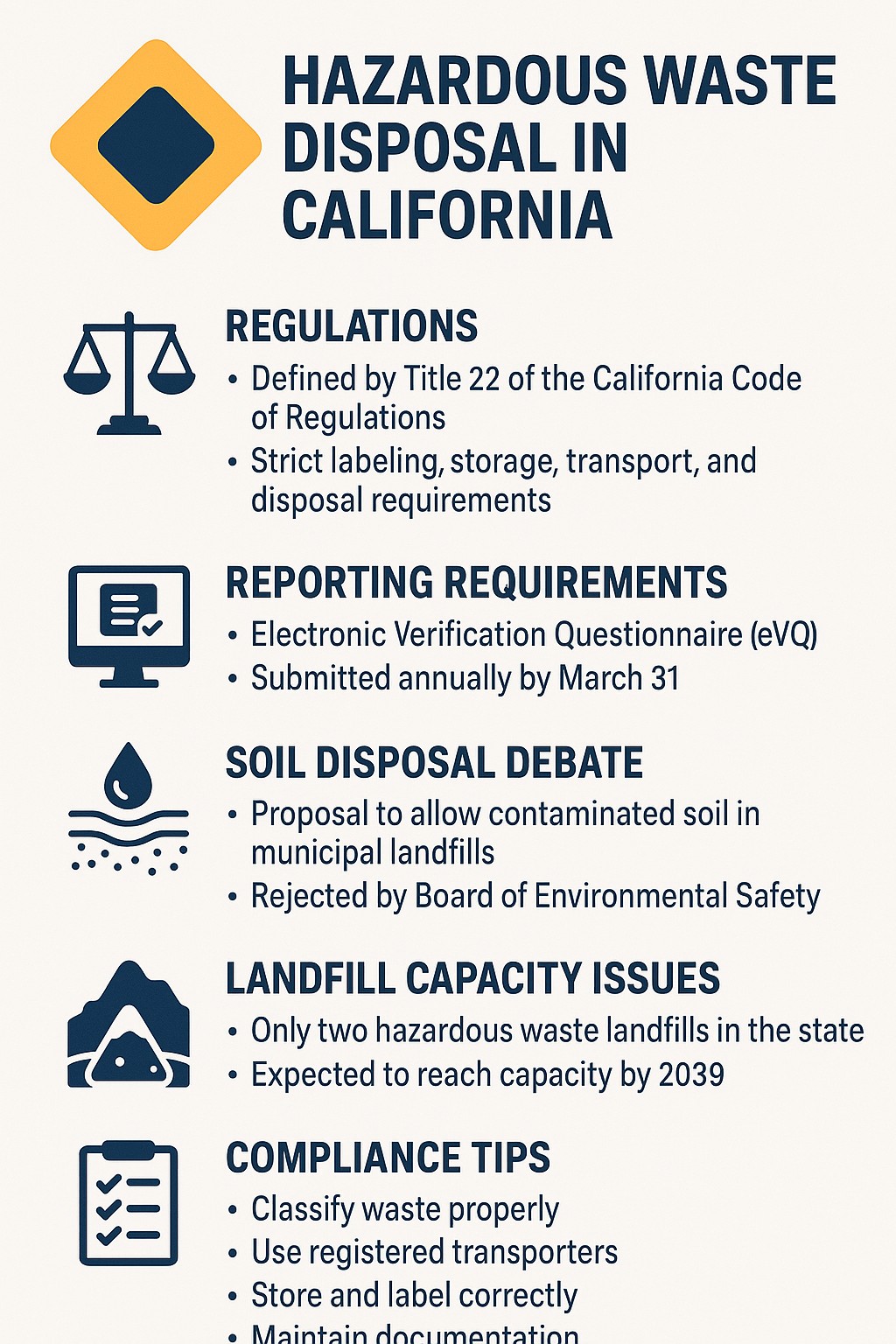
Hazardous waste in California is regulated under Title 22 of the California Code of Regulations and the California Health and Safety Code (Chapter 6.5). Waste is considered hazardous if it exhibits one or more of the following characteristics:
-
Ignitability
-
Corrosivity
-
Reactivity
-
Toxicity
Common hazardous waste types include:
-
Medical and pharmaceutical waste
-
Industrial solvents and chemicals
-
Pesticides and paints
-
Heavy metal-contaminated materials
Facilities that generate hazardous waste are classified by volume—Large Quantity Generators (LQGs) or Small Quantity Generators (SQGs)—and must follow strict storage, labeling, manifesting, and disposal protocols.
California Hazardous Waste Disposal Regulations in 2025
California’s hazardous waste laws are stricter than federal EPA regulations. As of 2025, several updates have been implemented:
Annual Electronic Reporting Requirement (eVQ)
All hazardous waste generators must now complete an Electronic Verification Questionnaire (eVQ) annually by March 31. This form reports waste types, manifest data, and disposal practices to the Department of Toxic Substances Control (DTSC).
Permitted Transporters and Facilities
Hazardous waste must be:
-
Transported by registered haulers
-
Disposed of at state-permitted TSDFs (Treatment, Storage, and Disposal Facilities)
-
Tracked through manifests from pickup to final disposal
Failure to comply can lead to fines, legal action, or shutdowns—especially during inspections by DTSC or local Certified Unified Program Agencies (CUPAs).
Policy Controversy: Soil Disposal Debate
In early 2025, California’s DTSC proposed allowing some hazardous contaminated soil to be dumped in regular municipal landfills to reduce transport emissions and costs.
The plan was met with strong public opposition. Environmental justice groups raised concerns about:
-
Groundwater contamination
-
Increased pollution in underserved communities
-
Lack of monitoring at general landfills
In May 2025, California’s Board of Environmental Safety unanimously rejected the proposal, upholding protections that restrict hazardous waste to specialized landfills like Kettleman Hills and Buttonwillow.
Hazardous Waste Landfill Capacity Issues
California currently has just two operating hazardous waste landfills—and both are nearing capacity. According to state data:
-
They could reach full capacity by 2039
-
Nearly half of the state’s hazardous waste is already being shipped out of state
-
Costs for hazardous waste disposal continue to rise due to limited in-state options
This poses challenges for waste generators who rely on timely, cost-effective disposal—especially during emergencies, natural disasters, or regulatory changes.
Tips for Staying Compliant with Hazardous Waste Disposal in California
To protect your business and community, here are a few key steps to take:
Classify Waste Properly
Conduct a full waste determination and ensure accurate classification of hazardous waste types.
Use Registered Transporters
Only work with certified hazardous waste haulers who are licensed and insured in California.
Store and Label Correctly
Use proper containers (e.g., UN-rated drums), secondary containment, and California-compliant labeling.
Maintain Documentation
Track every shipment with Uniform Hazardous Waste Manifests and keep records for at least 3 years.
Submit Required Reports
Complete the eVQ and any local CUPA forms on time to avoid penalties.
Work With a Trusted Partner
Partnering with a licensed hazardous waste disposal company ensures full compliance and peace of mind.
Why Choose MET for Hazardous Waste Disposal in California?
At Medical Environmental Technologies (MET), we specialize in hazardous waste disposal for healthcare, veterinary, laboratory, and industrial facilities throughout California.
Here’s what sets us apart:
-
Fully licensed and insured transport and disposal team
-
Customized pickup schedules based on your volume and needs
-
Transparent pricing—you’re only billed when service is performed
-
Support for all waste types including RCRA hazardous, pharmaceutical, and sharps waste
-
Up-to-date compliance guidance with the latest DTSC and CUPA rules
Whether you generate a few gallons of hazardous waste per year or need regular pickups, MET is here to help.