Sharps Disposal in California: Rules, Risks, and Safe Solutions
9/24/2025
Every year, millions of needles, syringes, and lancets (collectively known as sharps) are used in California by hospitals, clinics, veterinary practices, and even households. While these tools are essential in healthcare, they can also become dangerous if not handled properly. Improper sharps disposal exposes staff, patients, sanitation workers, and the public to needlestick injuries and the potential spread of bloodborne diseases.
To protect people and the environment, the California Medical Waste Management Act (MWMA) sets strict rules for sharps disposal. At Medical Environmental Technologies (MET), we help healthcare providers, schools, government agencies, and businesses comply with California law through safe, cost-effective sharps management programs.
What Are Sharps?
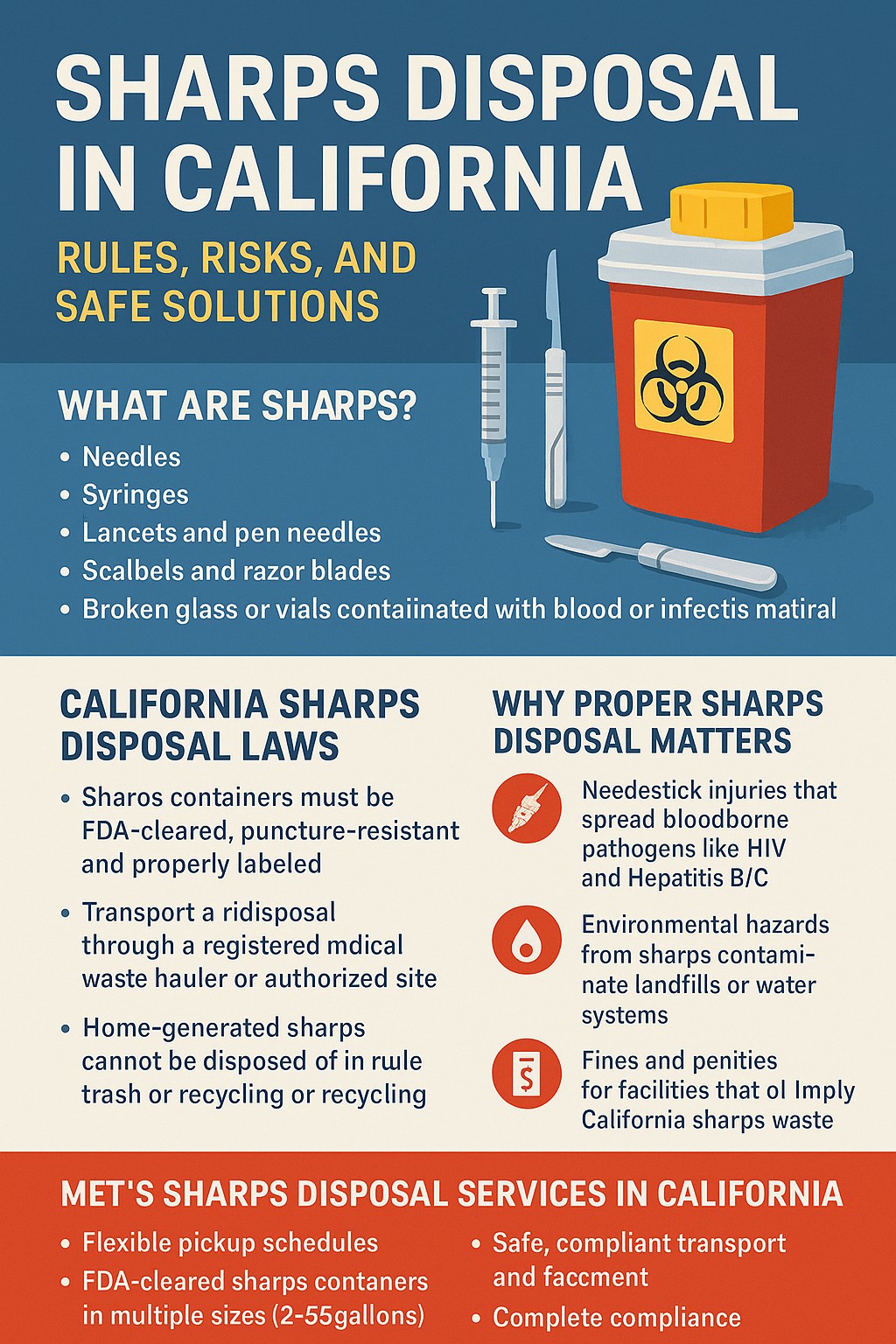
According to California law, sharps include any item capable of puncturing skin and contaminated with blood or body fluids. Common examples are:
-
Needles (used, unused, or broken)
-
Syringes (with or without attached needles)
-
Lancets, pen needles, and auto-injectors
-
Scalpels, razor blades, and surgical tools
-
Contaminated broken glass, vials, or ampoules
All sharps are classified as biohazardous medical waste and cannot be thrown in the trash, flushed down the drain, or recycled.
California Sharps Disposal Regulations
The California MWMA outlines how sharps must be handled:
1. Approved Containers
-
Sharps must be placed in FDA-cleared, puncture-resistant containers.
-
Containers must be:
-
Leak-proof and tamper-resistant
-
Red or labeled with the biohazard symbol
-
Closed securely before being moved or transported
-
2. Disposal Options
-
Registered medical waste hauler pickup - like MET, who transports sharps to authorized treatment facilities.
-
Mail-back programs – prepaid sharps containers returned through the postal system.
-
Collection sites – some pharmacies, clinics, and community centers participate in take-back programs.
3. Home-Generated Sharps
Since September 1, 2008, it is illegal in California to dispose of sharps in household trash or recycling bins. Home users must use a mail-back program or authorized collection site.
4. Facility Compliance
Facilities that generate sharps waste must:
-
Register with the California Department of Public Health (CDPH) if they generate larger volumes.
-
Maintain records and manifests of sharps disposal.
-
Ensure staff receive proper training in sharps handling and storage.
Why Proper Sharps Disposal Is Critical
Failing to follow California’s sharps disposal laws can lead to:
-
Public health risks – Needlestick injuries may transmit HIV, Hepatitis B, or Hepatitis C.
-
Environmental damage – Improperly discarded sharps can contaminate soil, water, or recycling streams.
-
Legal and financial consequences – Fines for non-compliance with the MWMA can cost facilities thousands of dollars.
-
Reputation risk – A single sharps-related incident can damage a healthcare provider’s trust with patients and the community.
MET’s Sharps Disposal Services in California
At MET, we make sharps disposal simple, compliant, and cost-effective. Our services are trusted by hospitals, outpatient centers, dental offices, schools, veterinary clinics, and government agencies statewide.
We provide:
-
Sharps containers in multiple sizes (2-gallon, 5-gallon, 18-gallon, 38-gallon, and 55-gallon drums).
-
Flexible pickup options – weekly, monthly, quarterly, annual, or on-call service.
-
DOT- and UN-rated packaging for safe transport.
-
Treatment solutions including autoclave and incineration.
-
Compliance documentation – manifests, certificates of destruction, and online portal access.
-
Staff training and guidance on sharps handling, storage, and segregation.
By working with MET, you ensure your sharps waste is managed legally, safely, and sustainably.