Major Changes in California Medical Waste Laws & Disposal Practices: What You Need to Know in 2025
6/27/2025
California is raising the bar on how medical waste is managed and for good reason. With growing environmental concerns and a push for tighter compliance, the state is rolling out new regulations, enforcing hefty penalties, and investing in smarter ways to handle waste.
If your facility handles anything from sharps and biohazard waste to expired medications or chemo containers, now is the time to get ahead of what’s changing.
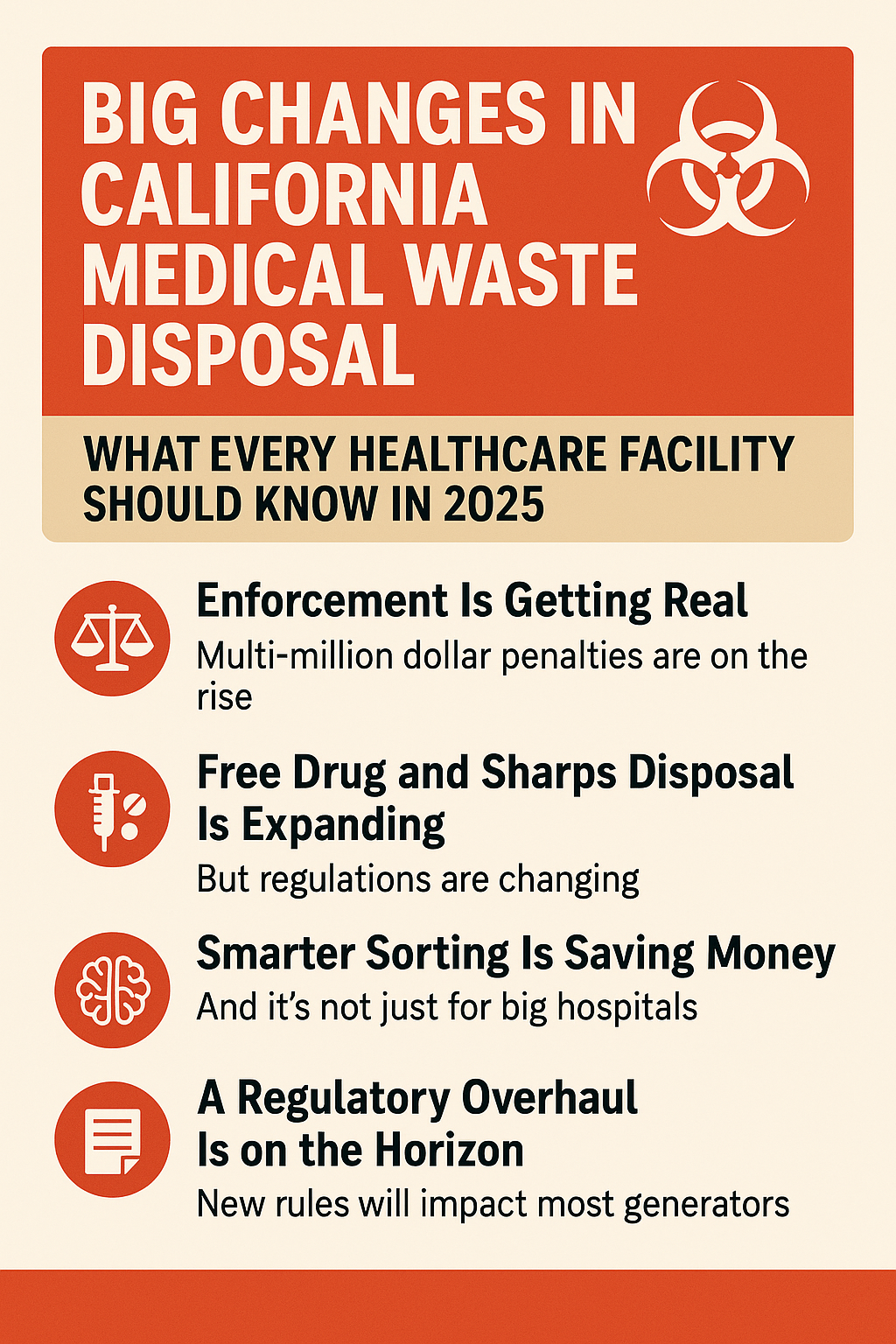
Enforcement Is Getting Real: Multi-Million Dollar Penalties Are on the Rise
California’s legal system isn’t pulling punches when it comes to improper waste handling. In fact, medical facilities across the state are facing aggressive investigations and steep fines for mismanaging medical and hazardous waste.
Take the case of Kaiser Permanente, which made national headlines with a $49 million settlement after allegedly disposing of hazardous materials and protected health information incorrectly. The fallout? Mandatory audits, stricter oversight, and a sharp reminder that compliance can’t be put on the back burner.
Whether you run a major hospital or a small clinic, enforcement like this shows the stakes are high and only getting higher.
Free Drug and Sharps Disposal Is Expanding (But Changing)
California’s Pharmaceutical and Sharps Waste Stewardship Program is continuing to grow in 2025. That means patients and the general public can still drop off home-generated sharps and unused medications at no cost thanks to programs like MED-Project and Drug Takeback Solutions Foundation.
But here’s where it gets interesting:
Several of the latest stewardship plans submitted this year were disapproved by CalRecycle. Why? The state is pushing for better accessibility, improved mail-back options, and more consistent public education.
So, if your organization offers take-back guidance or supports patient disposal, now’s the time to review how you communicate those options. More changes are likely on the way and staying informed helps your patients and your compliance team.
Smarter Sorting Is Saving Money And It’s Not Just for Big Hospitals
Over-classifying general trash as medical waste is one of the most common (and costly) mistakes in healthcare facilities. Red bag waste is expensive to treat so the more that gets tossed in there unnecessarily, the higher your bill.
The good news? Hospitals are fighting back with smart tech and better training.
Reduction In Motion, a firm helping hospitals across the country, is using waste audits, improved signage, and hands-on staff training to dramatically cut red-bag waste. Some facilities are seeing up to 50% reductions, simply by helping staff better understand what really belongs in each bin.
Even more exciting? New tools using AI image recognition are being tested to automatically identify waste types in real time. The result is cleaner waste streams, fewer violations, and lower disposal costs.
Whether you’re a surgery center, oncology clinic, or multi-site health network, there’s opportunity here to reduce risk and save money.
A Regulatory Overhaul Is on the Horizon
California’s Department of Toxic Substances Control (DTSC) is rolling out a massive overhaul of how hazardous waste is classified, managed, and reported. And these changes will impact nearly every generator in the state.
A few key updates include:
-
New simplified waste classifications
-
Easier transfer rules between nearby facilities
-
The adoption of federal EPA regulations for hazardous pharmaceuticals
-
A new annual Electronic Verification Questionnaire (eVQ) due every March
If your team hasn’t started reviewing these new requirements, now is the time. DTSC is also inviting feedback, so staying in the loop now could help you prepare for smoother implementation later.
Final Thoughts
California’s medical waste landscape is shifting rapidly and the consequences of falling behind are bigger than ever. But for those who adapt early, there’s also a major opportunity to streamline operations, reduce costs, and lead the way in sustainability.
Whether it’s training your staff, optimizing your waste stream, or staying ahead of DTSC’s changing rules, the key in 2025 is this: don’t wait until you’re under investigation to get compliant.
At MET, we help healthcare facilities of all sizes stay compliant, cost-effective, and ready for what’s next. If you need help navigating these changes or want a quick audit of your current waste process, we’re here for you.