
Things You Didn’t Know About Medical Waste Disposal (But Probably Should)
5/20/2025
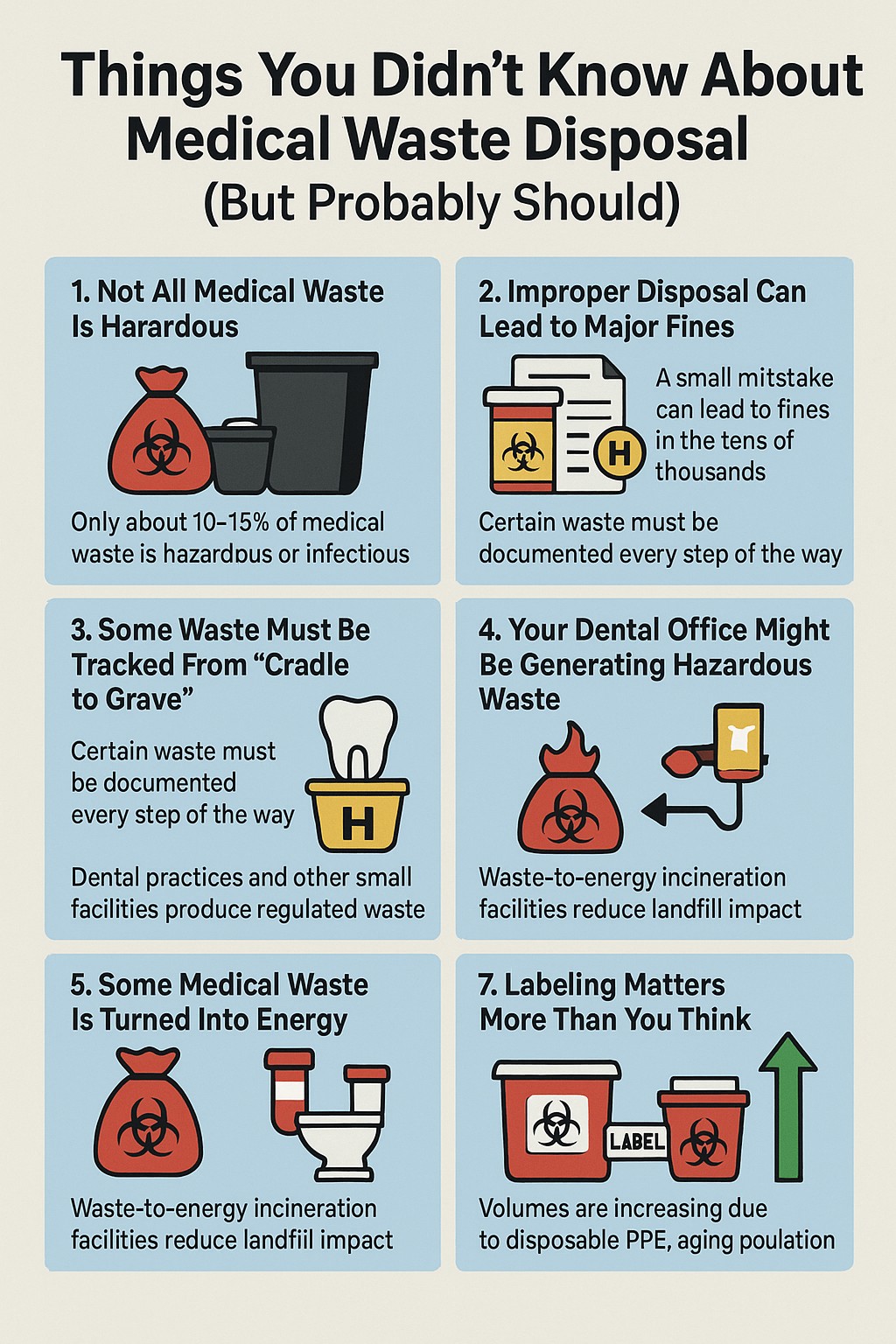
Things You Didn’t Know About Medical Waste Disposal (But Probably Should)
When most people think of medical waste, they picture red bags and sharps containers. But the world of medical waste disposal is far more complex — and sometimes surprising. Whether you’re a clinic manager, a vet tech, or just someone curious about where all that waste ends up, here are a few things you may not know about how medical waste is handled (and why it matters).
1. Not All Medical Waste Is Hazardous
It’s a common misconception that everything produced in a healthcare facility is dangerous. In reality, only about 10–15% of medical waste is considered hazardous or infectious. The rest? It can include everything from food scraps in hospital cafeterias to packaging from sterilized equipment things that don’t pose a risk but still require proper sorting and handling.
2. Improper Disposal Can Lead to Major Fines
Medical waste is heavily regulated by agencies like the EPA, DOT, and OSHA, especially when it comes to hazardous or infectious materials. A small mistake like mixing sharps with pharmaceuticals or storing containers improperly can lead to fines in the tens of thousands of dollars. It’s not just a matter of safety; it’s a legal risk too.
3. Some Waste Must Be Tracked From “Cradle to Grave”
Under RCRA (Resource Conservation and Recovery Act), certain hazardous medical waste must be documented from the moment it’s created to its final disposal whether that’s incineration, fuel blending, or another approved method. This is called “cradle-to-grave” tracking, and it ensures accountability every step of the way.
4. Your Dental Office Might Be Generating Hazardous Waste
It’s not just hospitals dental practices, veterinary clinics, tattoo shops, and even spas can generate regulated medical waste. Amalgam, lead foils, disinfectants, and expired meds all fall under categories that may require special disposal methods, especially in states like California where rules are strict.
5. Some Medical Waste Is Turned Into Energy
Not all medical waste ends up in landfills. In fact, some facilities use waste-to-energy incineration, which converts non-recyclable waste into usable heat or electricity. It’s not perfect, but it’s one way the industry is trying to reduce its environmental impact.
6. “Flushable” Doesn’t Mean Safe
It might be convenient to flush certain chemicals or medications down the drain, but it’s often illegal and environmentally harmful. Many pharmaceuticals end up in waterways, affecting aquatic life and even drinking water. The proper disposal of pharmaceuticals through incineration or take-back programs is crucial.
7. Labeling Matters More Than You Think
You might have the right container, but if the label isn’t correct or if there’s no label at all you could be out of compliance. DOT regulations require specific wording, symbols, and even font sizes for containers used in transportation. It's one of the most common (and costly) mistakes facilities make.
8. Medical Waste Is Rising (Fast)
Thanks to disposable PPE, single-use devices, and an aging population needing more healthcare, medical waste volumes are increasing worldwide. That’s why sustainable practices like reusable sharps containers, recycling non-hazardous plastics, and minimizing over-packaging are becoming more critical.
The Bottom Line
Medical waste disposal isn’t just about red bags and pickup schedules. It’s about safety, sustainability, and staying ahead of complex regulations. Whether you’re new to the field or have years of experience, staying informed is the first step toward smarter, safer waste management.