
Biohazardous Waste Spotlight: What Is Biohazardous Waste?
6/16/2026
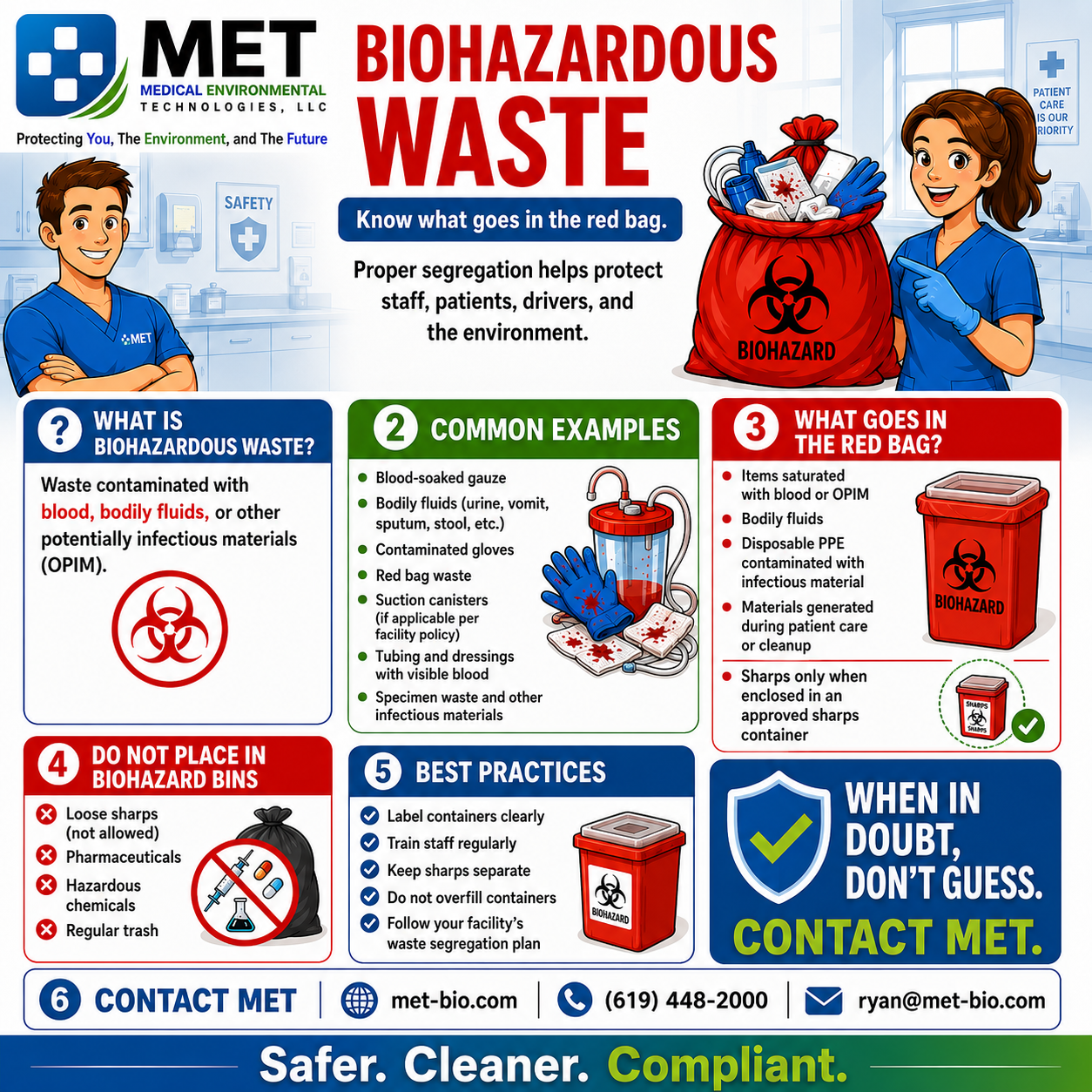
Proper medical waste disposal starts with understanding what type of waste you are handling. One of the most common waste streams generated by healthcare facilities is biohazardous waste.
Biohazardous waste, also known as regulated medical waste, includes materials that may be contaminated with blood, bodily fluids, or other potentially infectious materials. Because this waste may pose a risk to healthcare workers, patients, waste handlers, and the environment, it must be separated, packaged, and disposed of properly.
What Counts as Biohazardous Waste?
Biohazardous waste can come from many different healthcare settings, including medical offices, dental practices, veterinary clinics, labs, surgery centers, urgent care facilities, and more.
Common examples of biohazardous waste include:
- Blood-soaked gauze
- Contaminated gloves
- Bandages and dressings
- Tubing contaminated with blood or bodily fluids
- Items used during patient care cleanup
- Materials contaminated with other potentially infectious materials
If an item is contaminated with blood or bodily fluids, it may need to be handled as biohazardous waste.
What About Sharps?
Sharps, such as needles, syringes, lancets, and scalpels, should not be placed loose into a red bag or regular trash. Sharps must first be placed into an approved sharps container. Once properly contained, sharps containers can be managed through the appropriate medical waste disposal process.
This helps prevent needle sticks, injuries, and exposure risks for staff and waste handlers.
Why Proper Segregation Matters
Keeping biohazardous waste separate from regular trash, pharmaceutical waste, hazardous waste, and other waste streams is important for safety and compliance.
Proper segregation helps:
- Protect healthcare staff and patients
- Reduce exposure risks for drivers and disposal facility workers
- Prevent waste from being placed in the wrong container
- Avoid unnecessary compliance issues
- Keep disposal costs more controlled
When waste streams are mixed incorrectly, the waste may require different handling, special processing, or additional review. That can create delays, added costs, and safety concerns.
How Should Biohazardous Waste Be Stored?
Biohazardous waste should be placed in the proper red bag, biohazard container, or approved medical waste container. Containers should be clearly labeled, securely closed when full, and stored in a designated area away from public access.
Facilities should also make sure employees understand what goes into each container. Clear signage and regular staff training can help reduce mistakes.
When in Doubt, Ask Before Tossing
Medical waste disposal can be confusing, especially when different waste streams are generated in the same facility. If your team is unsure whether something belongs in biohazardous waste, sharps, pharmaceutical waste, trace chemo, or hazardous waste, it is always better to ask first.
At Medical Environmental Technologies, we help healthcare facilities identify, separate, and dispose of their waste properly.
Need Help With Biohazardous Waste Disposal?
MET provides reliable biohazardous waste disposal services for healthcare facilities that need safe, compliant, and convenient waste management.
Whether your facility generates red bag waste, sharps containers, pharmaceutical waste, trace chemo, or hazardous waste, our team can help you determine the right disposal solution.
When in doubt, don’t guess — contact MET.
Medical Environmental Technologies
Website: met-bio.com
Phone: (619) 448-2000